|
|

|
|
|
|
|
Facility News
|
It is only February but the FCF activity is already pretty high ! You guys are pretty committed and our machines are non stop producing data. Now, as we are still in the ever loving mood grantd by Valentine's day ❤️, don't forget to take a moment and give some love to your favorite machine. There's nothing kinder to a flow cytometer than filtered samples and proper long cleaning session after usage 😉 so keep that in mind for all of them !
|
|
|
|
In this month FACS Tips, Kevin presents a new flexible technology that brings much needed improvement to cell secretion detections. Let us know if you would like to use this technique in the future !
|
|
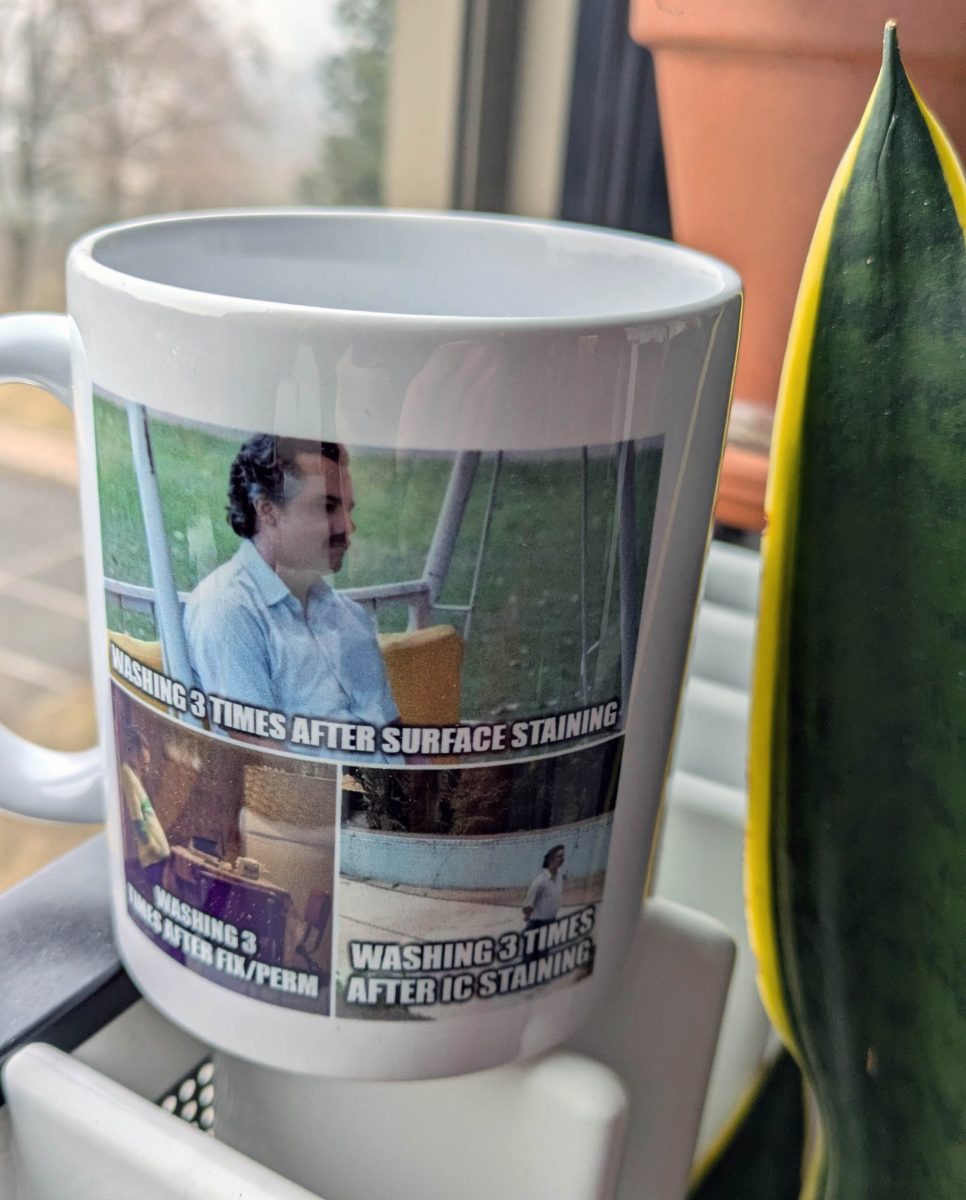
Matteo Rossi won the mug this month, Congratulations to you !
|
|
Each month, we will ask you 3 questions about the newsletter topic. If you win, you can enter the lottery to win a unique mug designed by the FCF team !
Please take few minutes to answer the quiz HERE.
|
|
|
|
|
FACS Tips
|
Nanovials: Catch and Release
|
|
Secreted proteins, vesicles, and other soluble molecules can tell a lot about what a cell is doing. Having this information can lead to powerful discoveries in the areas of cell therapies and CAR/TCR discovery, and beyond. At the moment though, assays used to detect these extracellular secretions have limitations. For instance, while cytokine staining is widely used, the fixation and permeabilization steps involved in intracellular staining make further downstream experiments with live cells impossible. Other assays for live-cell secretions, such as ELISpot or chip technologies, often lack cell recovery options and require expensive, specialized equipment. A new development by Partillion Bioscience offers a promising solution to these challenges.
|
|
|
|
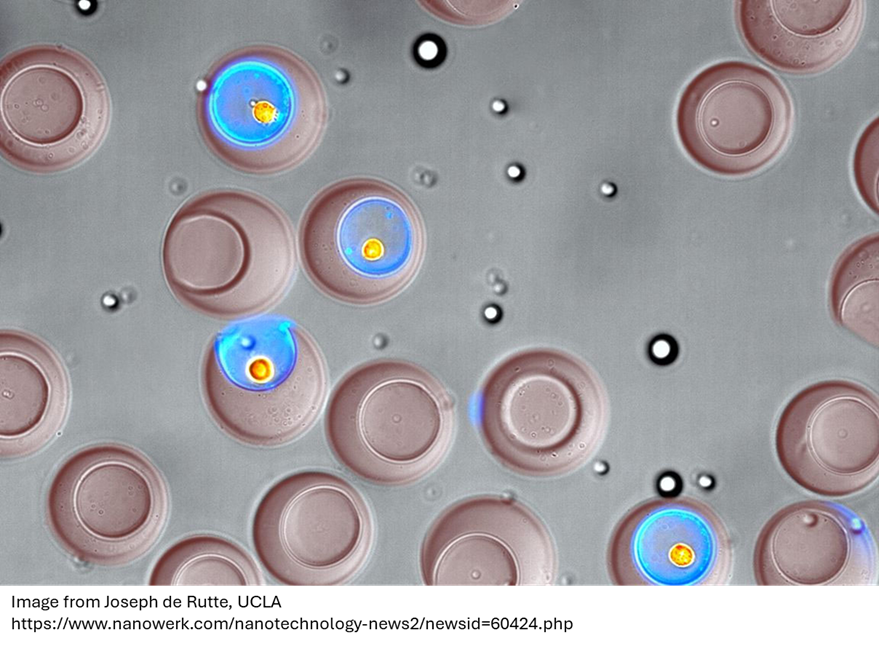
They have introduced a novel single-cell protein secretion assay called nanovials. These uniform transparent hydrogel capsules, ranging in size from 35 to 50 microns, have a cavity to capture cells, but also what it secretes to a target specific antibody. Unlike bioreactors or well plates, where large volumes can dilute a cell’s secretions, nanovials, with their smaller than 1 nanoliter cavity, create a microenvironment that better retains and detects these molecules. In this way you can think of each nanovial as a test tube, allowing functional screening of 100,000s of cells in a short time frame. As no fixation or permabilisation step is necessary, nanovials can be sorted viable for further experimentation. Partillion even claim that the capsule reduces shear stress forces on the cell to improve viability after sorting.
|
|
|
|
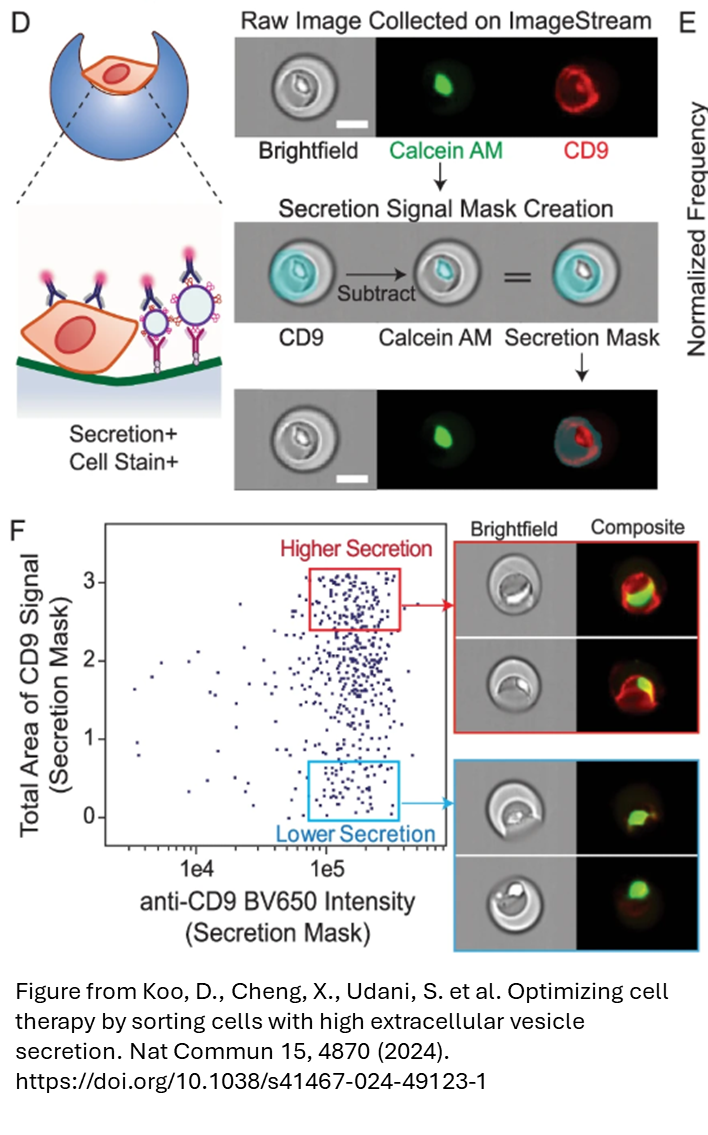
Nanovials enable researchers to track not only the presence of specific secreted proteins but also their quantities. For example, Partillion has demonstrated the technology’s effectiveness by combining it with the ImageStream system, capturing detailed fluorescence images of protein secretion within the nanovial space. Furthermore, nanovials are fully compatible with 10x Genomics platforms, allowing researchers to integrate single-cell secretion data with sequencing experiments for comprehensive analyses.
|
|
|
|
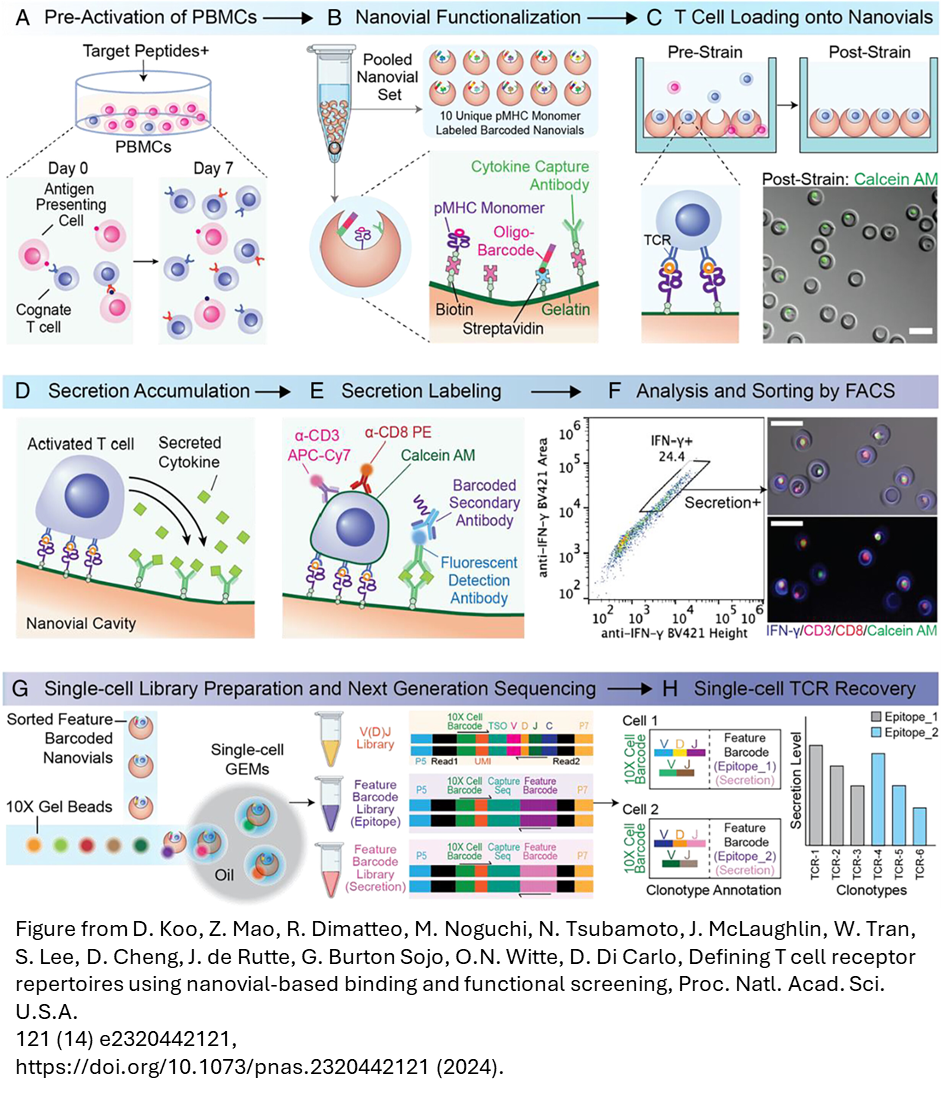
In the example above, Koo et al in their paper titled Defining T cell receptor repertoires using nanovial-based binding and functional screening, used nanovials to identify TCRs with sufficient affinity and potency by means of cytokine secretion for downstream sorting and sequencing of functional TCRs. The researchers quantified the secretion of IFN gamma and granzyme B after incubating into nanovials and then staining and sorting. After sorting, they report that the cells on nanovials were introduced directly into the 10x system to maintain the connection between a nanovial with a feature barcode oligonucleotide tag and the attached T cell. The researchers also conclude that higher secretion rate suggested better recovery of rare functional TCRs.
|
|
|
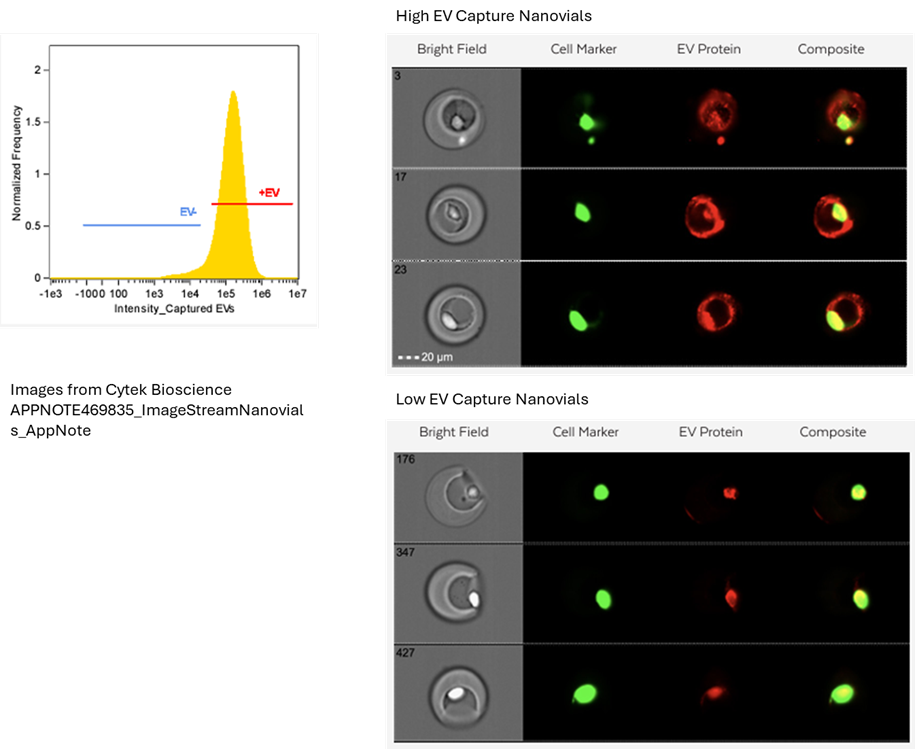
In the example above, mesenchymal stem cells were evaluated for secretion of EVs by means of the ImageStream. These cells, once incubated with the nanovials, were induced to secrete EVs. In the image gallery the green represents the cell marker, and the red represents the EV protein stain. Thanks to the masking technology in the IDEAS software, analysis can be performed to separate pixel overlap and look for fully secreted EV protein and then evaluate this region for intensity. Here we see galleries of both high and low EV capture cells in nanovials.
|
I think here at UNIL this puts us in a particularly unique and exciting position. Our existing infrastructure includes sorters capable of handling nanovials, a genomics facility for 10x experiments, and the ImageStream system for detailed imaging projects, such as analyzing cytokine or extracellular vesicle (EV) secretion.
|
|
The greatest opportunity of all in my opinion would be to combine this assay with our S8 Discover cell sorter. This advanced instrument, one of the few in Europe currently, offers a rare chance to design experiments that integrate imaging and sorting. For instance, researchers could image secreted protein capture in real-time while sorting cells based on their functional responses for downstream analyses. Such experiments could pave the way for innovative discoveries, and the FCF team is eager to collaborate with anyone interested in exploring these possibilities.
|
|
|
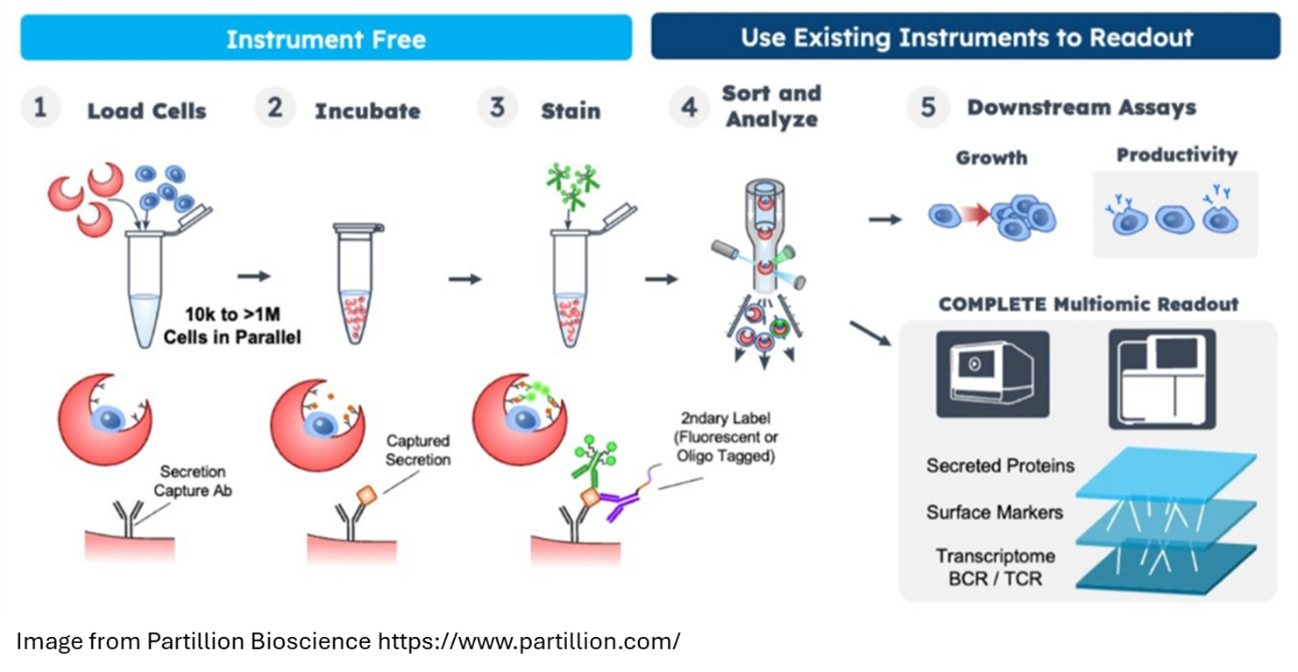
The nanovial workflow appears to be straightforward. Simply mix nanovials with cells at an optimized ratio, incubate for a specified duration, and stain for the necessary markers. During analysis or sorting, the nanovial-cell combination may appear with higher side scatter on FSC vs. SSC plots, but fluorescence signals should remain largely unaffected, aside from potential minor autofluorescence.
|
|
While the potential of nanovials is exciting, we acknowledge that challenges may arise. Not every advertised capability will translate seamlessly into practice, and unforeseen hurdles are common in new technologies. Nonetheless, we are enthusiastic about exploring this assay and encourage researchers to share their ideas for implementing it in their experiments. If you’re interested in this technology and want to learn more, we can attempt to schedule a seminar/webinar on the technology with Partillion, so be sure to let us know what you think. As always, the FCF team is available to answer questions and provide support.
|
|
|
|
|