|
|

|
|
|
|
|
|
|
Facility News
We're half way through the two hottest months of the year, actually ever recorded, and we're barely recovering from the frenzy of the world cup ⚽ ! Yet, Science has to keep going and never stops ! Or does it ? In this month FACS Tips, Kevin has decided to take a step back from flow cytometry tips and technical terms to muse about one of the MVP of our scientists lives at the Biopole. Please take the time to enjoy this summer read hopefully with a fresh cocktail 🏆on your side and see you next month 🥰
|
|
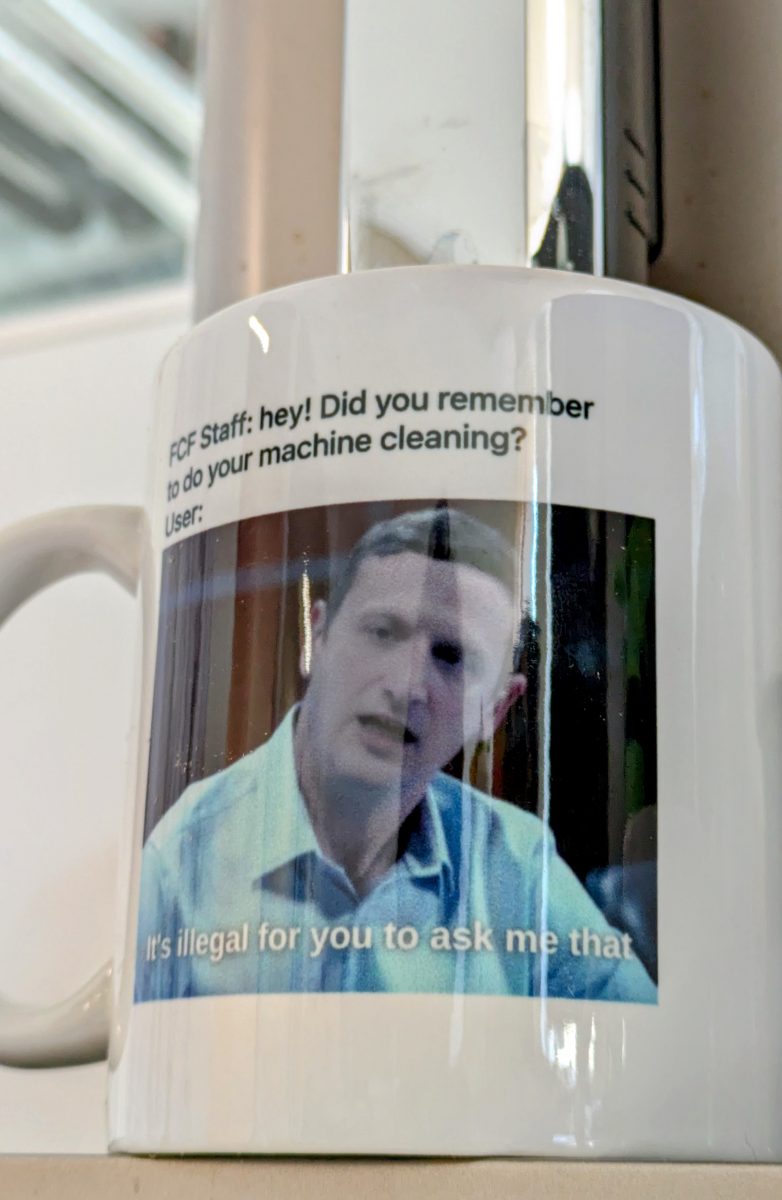
Julie Twardowski won the mug of the month below, congratulations to you ! Please come by to our office at the SE-C Biopole to pick it up !
|
|
|
Please try to answer our quiz it and get a chance to win our next mug of the month ! Good luck to you all !
|
|
|
|
|
|
FACS Tips
|
Added Time in the Sort Room
|
|
Every era has its untouchables, the players who make the game look different just by being on the pitch. This World Cup, much has been made about two of them, both possibly playing their last tournament: Lionel Messi of Argentina and Cristiano Ronaldo of Portugal, at respective ages of 39 and 41. The chances they play again in 2030 are limited, so rightfully, they get the attention and respect that two legends have earned as they complete their swan song.
|
|
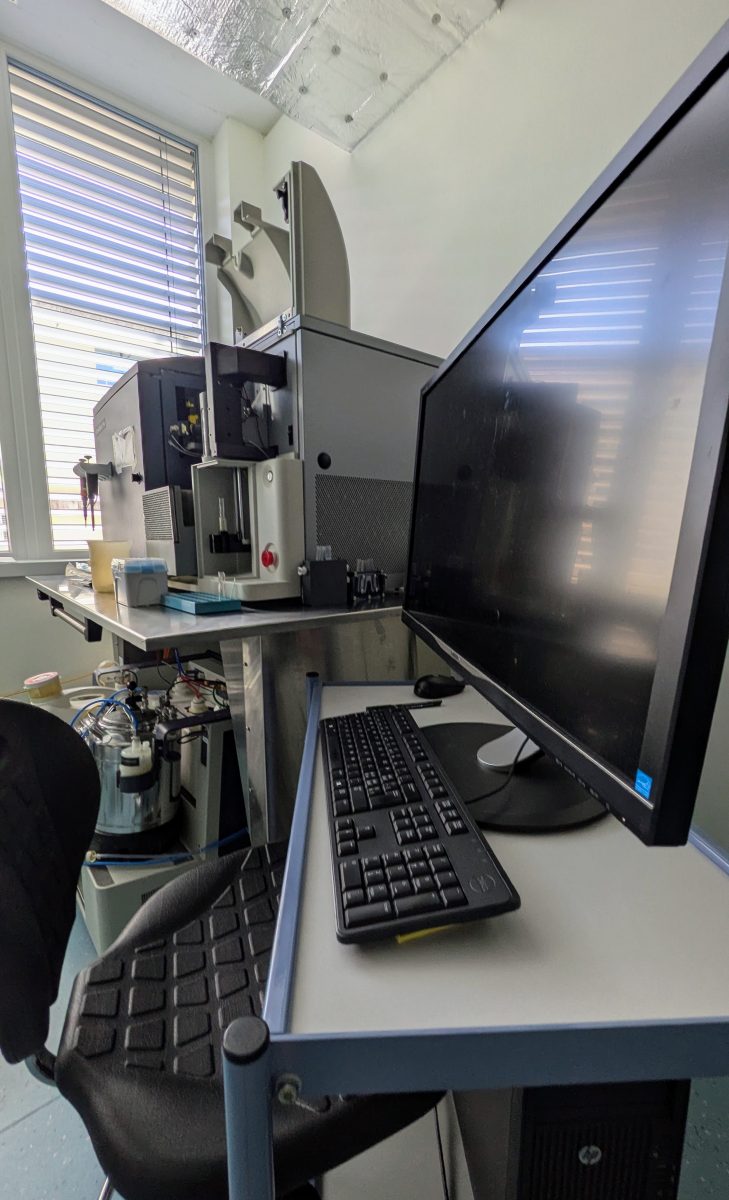
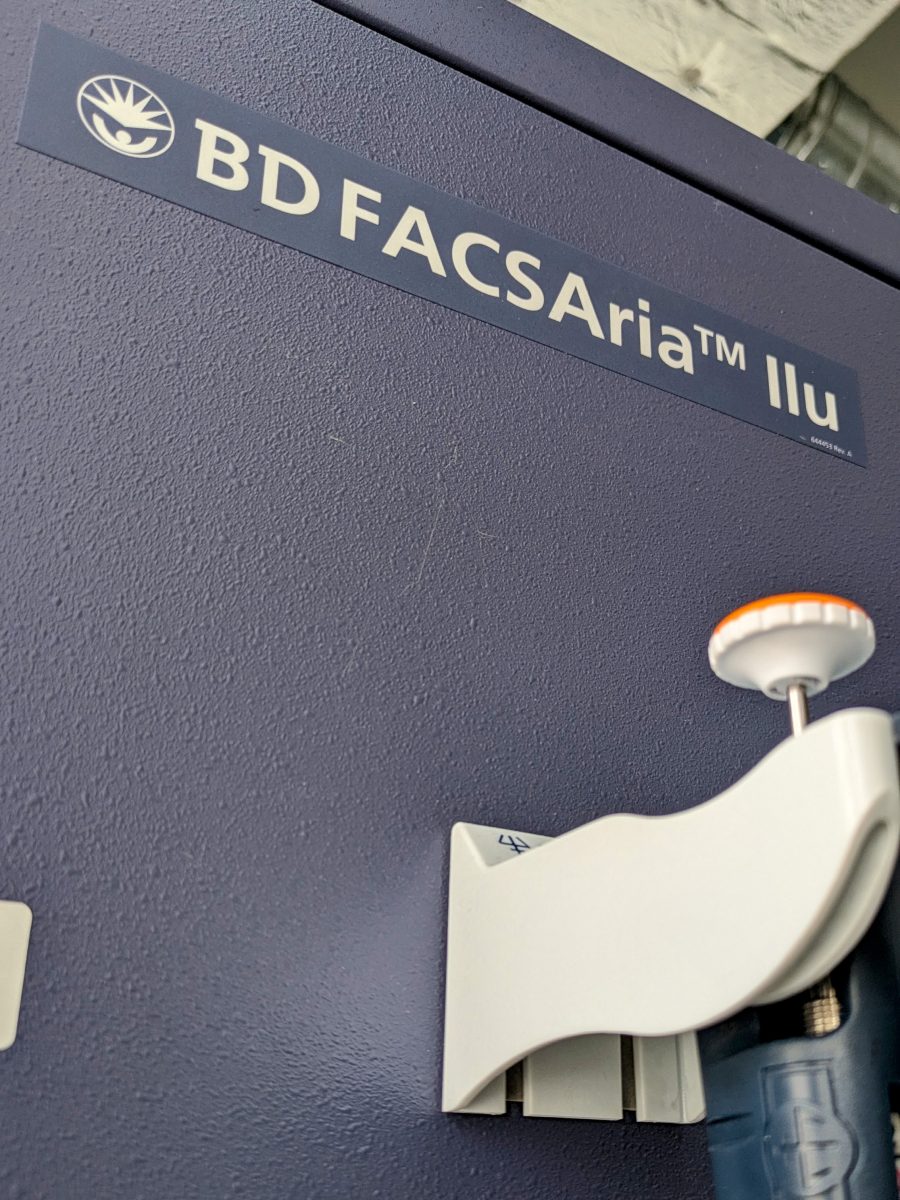
But there's a third legend whose retirement clock is also ticking, and unlike the other two, you won't find this one on a team sheet. You'll find it in the sorting room. This third fork of the legendary trident of performers may also not be around come 2030, and like its counterparts, it has followed an incredible path to arrive at this point: upgrades, several moves, and even a change of name, though we know it best as the Aria II.
|
|
|
|
The Aria II, then known as the Aria I, made its professional debut in 2004 with the Ludwig Cancer Research Center, the same year as Lionel Messi at Barcelona (CR7 was two years earlier, in 2002).
|
|
Up until this point, sorters had largely been cumbersome machines, finicky and temperamental to operate, requiring the full-time attention of an engineer to keep them running. Not to mention early sorters also required large, water-cooled lasers that took up a great deal of space. Despite this, the Aria had big shoes to fill, as it was stepping in to replace a Becton Dickinson FACSII that had been purchased in 1978, making it the first FACSII sorter in continental Europe, putting Lausanne on the map as an innovative center for flow cytometry. It was only retired at the end of 2003 with the anticipated arrival of the Aria, an impressive 25-year career. There has been a consistency in these sorters, having a long lifespan here in Epalinges.
|
|
During this early phase, the Aria I was a member of the Ludwig Institute here at the CLE-C in Epalinges. The Aria I was new and inexperienced but was equipped with revolutionary stability and an independence that allowed the operator more flexibility to accomplish their own tasks. Named after the musical term to strike a solo performance, it took sorting from a room sized goliath to a benchtop instrument that could be operated without a frantic engineer at its side. It allowed configuration changes quickly, and software wizards that efficiently got a user from setup to sorting with far fewer manual hurdles. A true team player. And with its gel-coupled glass cuvette, it achieved analyzer-level resolution in the body of a sorter, a unicorn player that could see the field better while making pure, precision cell passes into sterile collection tubes with efficiency. However, it didn't come cheap: it was estimated to be around 1 million Swiss francs at the time of purchase.
|
|
It did receive an important upgrade in 2008, elevating its fluidics and ascending to its presently known status as an Aria II. The changes were largely focused on the fluidics system. In trying to make the sorter easier to use, BD had automated many of the processes for cleaning, sterilizing, running, and monitoring, but in the process, over-engineered what was once a simple fluidics design of applying constant pressure to the sheath for a steady velocity and stable breakoff point. The result was a fluidics system with too many valves and switches, a complex tangle of tubing more prone to breaks and contamination. The 2008 upgrade was what finally tackled that mess and simplified the fluidics back down.
|
|
At the hands of our technical wizard Danny Labes, and at the cost of some of his evenings and weekends, it became clear that the Aria could have an increased set of detectors to expand its colour palette to the optical configuration it has today. This was the beginning of a long series of adjustments, alterations, and improvements by Danny, to keep the Aria not just running, but relevant in a world of competition with newer and shinier instruments.
|
|
The Aria II quickly came into its own as a robust and reliable machine that has been a backbone of the facility for over two decades. Despite its limited analytical capabilities with only three lasers, it made up for it with a steady performance and tight bright peaks on its QC. It does have some quirks; for instance, it has the habit of getting through a litre of ethanol each night in the locker room, part of the nightly clean-up ritual after a long day of sorting.
|
|
|
|
At the beginning of 2011, the FCF at UNIL was formed as a new core facility under the management of Anne Wilson, and with it came the opportunity to acquire the Aria II in the transfer window. The new signing settled into the playing area of the Biopole SE-D, tucked into the smaller P2 room that some of our older users will remember also housed the ImageStream, the CytoFLEX S1, and, eventually and temporarily, the S8.
|
|
In 2014, the sorter moved again into the small but custom-built sorting room in the SE-D, where it stayed until 2025. There it was aligned side by side with the Aria III, forming the powerful sorting tandem that allowed for the pairwise handling of large and plentiful samples in a comparable and consistent manner that kept the staff and scientists processing at a speed that made us able to all go home on time, at least most days. To this day, these two sorters have been inseparable elements of our facility, even into their new home in the SE-C.
|
|
At the end of 2021, entering the twilight of its career, the Aria II moved under the managerial system of Jean-François Mayol, whose diverse-spread offense with multiple creative options on the playing field (imaging accuracy with the S8, spectral specialism with the Aurora) has allowed the Aria II to carry less of the load while still having its moments to shine, whether off the bench or as a starter.
|
|
In my personal time in the facility, starting in November of 2018, it’s hard to remember a period of more than a week that the Aria II has been out of service. It’s had lasers replaced, pumps and valves changed, and a few hundred o-rings substituted to tackle drips and leaks. Through the dedicated attention of the team around it, and Danny’s eclectic inventory of parts and pieces, it has kept persevering through the inevitable bumps and bruises that come with being a heavily relied upon member of the FCF.
|
|
|
|
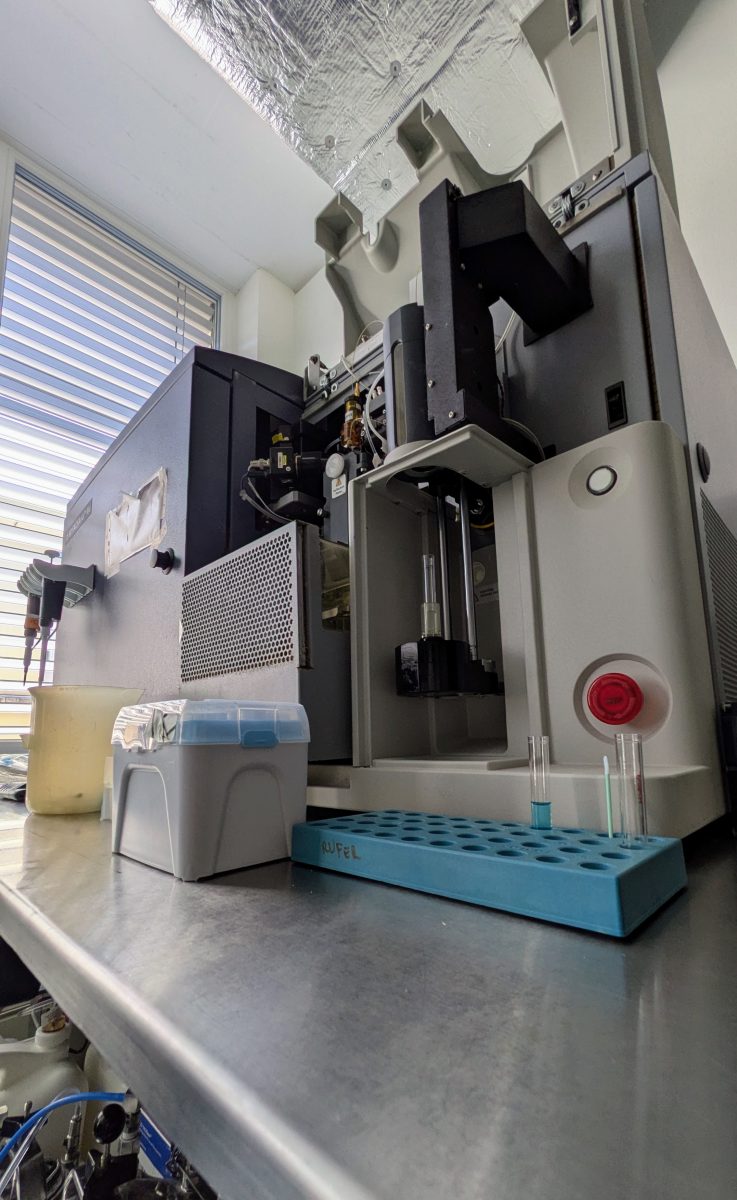
After 22 years, it may not be ready to hang up its collection chamber just yet. The Aria II hasn't been relegated to a museum piece, it's still a more-than-capable sorter that we trust every day with your precious samples, and a machine we've grown genuinely fond of here in the facility. Maybe it doesn't have four more years in it, but it certainly will have more than a few experiments left in the colours of UNIL.
|
|
|
|
|