We invite you to the Massive Open Online Course (MOOC) Healthy Urban Systems, designed specifically for professionals and enthusiasts in the field of urban health. This first part of the MOOC series (consisting of 3 MOOCs) will take you on a comprehensive 4-week journey, navigating through multidisciplinary frameworks and analytical observations critical to understanding the complexities of urban health.
You will learn to:
Address urban health through complex multidisciplinary approaches.
Use multidimensional and multiscale concepts, methods, and ecosystem frameworks.
Mobilize and support all players directly or indirectly involved in urban health.
Dedicated to all levels of disciplines linked to the city, health, the environment, social and human sciences, data sciences…
The MOOC is entirely in English, with possible subtitles in French and Chinese.
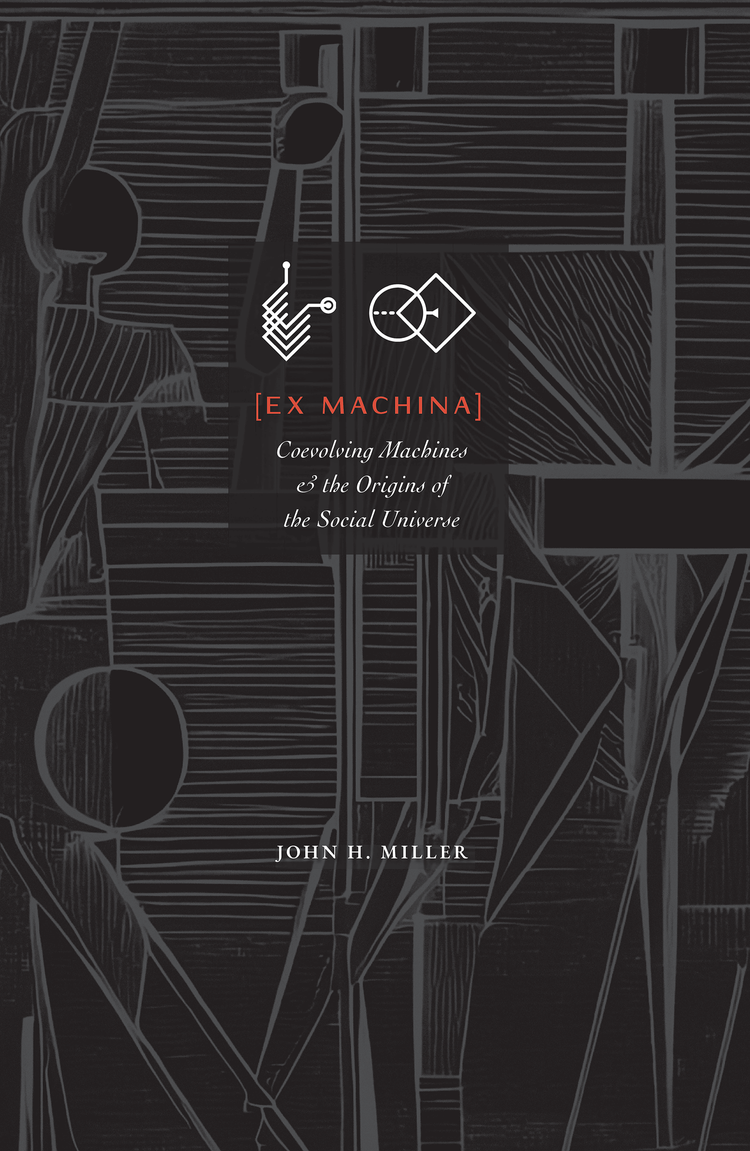
Ex Machina: Coevolving Machines & the Origins of the Social Universe
John H. Miller recently published “Ex Machina: Coevolving Machines & the Origins of the Social Universe,” in which he combines ideas from the study of games, the foundations of computation, and Darwin’s theory of evolution to introduce a methodology for studying systems of adaptive, interacting, choice-making agents, and uses this approach to identify conditions sufficient for the emergence of social behavior. In his words, he explores how evolving automata can go from asocial to social behavior and finds that systems of simple adaptive agents can be rapidly transformed into a rich social world.
John H. Miller is an economist from the University of Colorado. He received his Ph.D. in economics from the University of Michigan in 1988, where he worked with Ted Bergstrom and Hal Varian. He joined the Santa Fe Institute as its first postdoctoral fellow. He has been associated with the Institute ever since. He joined Carnegie Mellon University as an assistant professor in the Department of Social and Decision Sciences, later becoming a professor in 2000.
You can find out more about this book by visiting the following website:
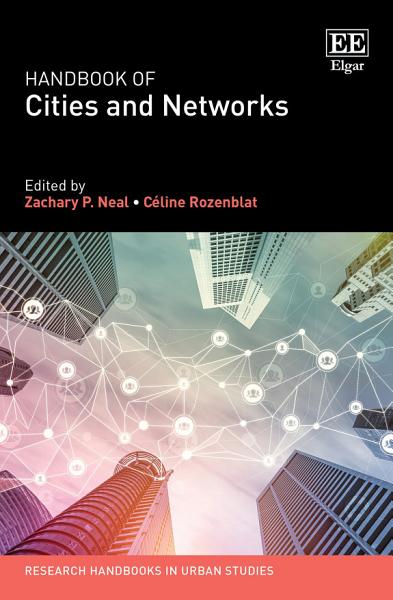
Edited by Zachary P. Neal, Associate Professor, Department of Psychology, Michigan State University, US and Céline Rozenblat, Professor of Urban Geography, Faculty of Geosciences and Environment,Université de Lausanne, Switzerland
‘If you want to understand cities – the innovation and dynamism they generate and the way they sort and segregate people by class, race and other dimensions – you have to start by understanding that cities are networks. Zachary Neal and Céline Rozenblat have done all of us who care about cities a great service by pulling together the very best and brightest thinkers on cities and networks in this terrific volume.’ – Richard Florida, University of Toronto, US and author of The Rise of the Creative Class and The New Urban Crisis
This Handbook of Cities and Networks provides a cutting-edge overview of research on how economic, social and transportation networks affect processes both in and between cities. Exploring the ways in which cities connect and intertwine, it offers a varied set of collaborations, highlighting different theoretical, historical and methodological perspectives.
International contributions assess the state of the field of network analysis, presenting interdisciplinary insights that draw on theory from geography, economics, sociology, history, archaeology and psychology, and outlining methodological tools that include ethnographic, qualitative and quantitative approaches. Illustrating a framework for integrating the diversity of urban networks, the Handbook demonstrates that by exploring urban networks with different combinations of levels and scales, new insights and opportunities can emerge.
Featuring focused studies on specific regions and cities, this state-of-the-art Handbook is essential reading for scholars and researchers of urban studies and regional science, particularly those focusing on the transformation of cities as connected spaces through intracity and intercity networks. Its core theoretical insights will also benefit graduate students in urban studies and network analysis.
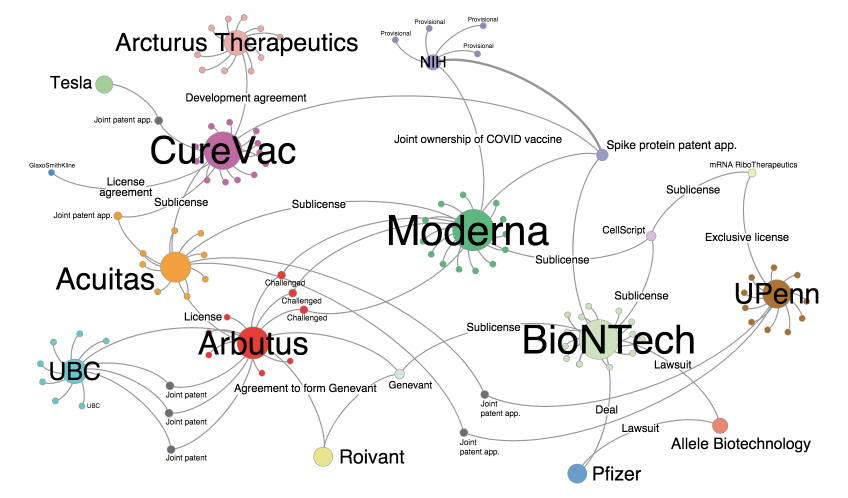
The rapid development of Covid-19 vaccines has been underpinned by an intricate web of co-patents, intellectual property agreements and lawsuits. Showing them as a network can be useful to highlight the most relevant nodes and the relations they’re embedded into. A preliminary work on this has been recently featured in Nature Biotechnology. Besides reconstructing the main actors in the production of mRNA vaccines, the authors have also analyzed the landscape of scientific terms used in mRNA patents, using a network methodology and the software VOS viewer . A heated debate is underway around the possibility to limit intellectual property rights to facilitate the access to vaccines for developing countries, and network visualization tools can greatly help in understanding the complexity of the relations at stake.
Source: Gaviria and Kilic, 2021: A network analysis of COVID-19 mRNA vaccine patents. Nature Biotechnology, VOL 39, pp. 546–549.
The Covid-19 pandemic has contributed to the daily use of graphics, dashboards and visualizations that helped make sense of its spread and global development. Data are increasingly available and easy to manipulate and diffuse. Big data inform business decisions and policy-making but they play an increasing role also in journalism, higher education and in public debates overall.
The European Journalism Center, supported by the Google News Initiative, have released their second Data Journalism Handbook , an open access e-book that inquires into the foundations, practices and actors of data journalism. The way data are incorporated in public debates is changing the way news are told to the public. Social scientists are also increasingly using big data in their researches, and for these to be relevant to society it is important to be able to disseminate results and communicate them properly. This is why this e-book might also be of interest for academics that wish to communicate and diffuse their research findings.
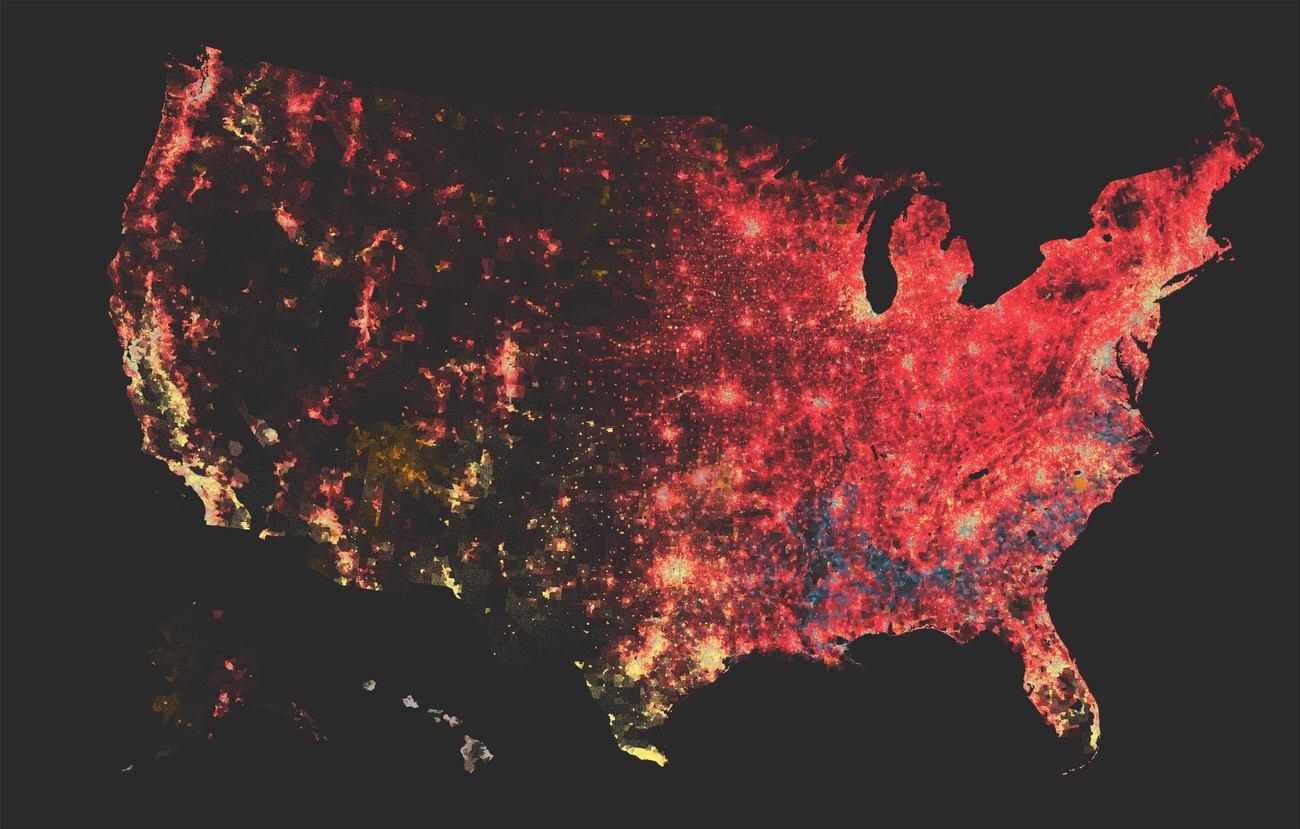
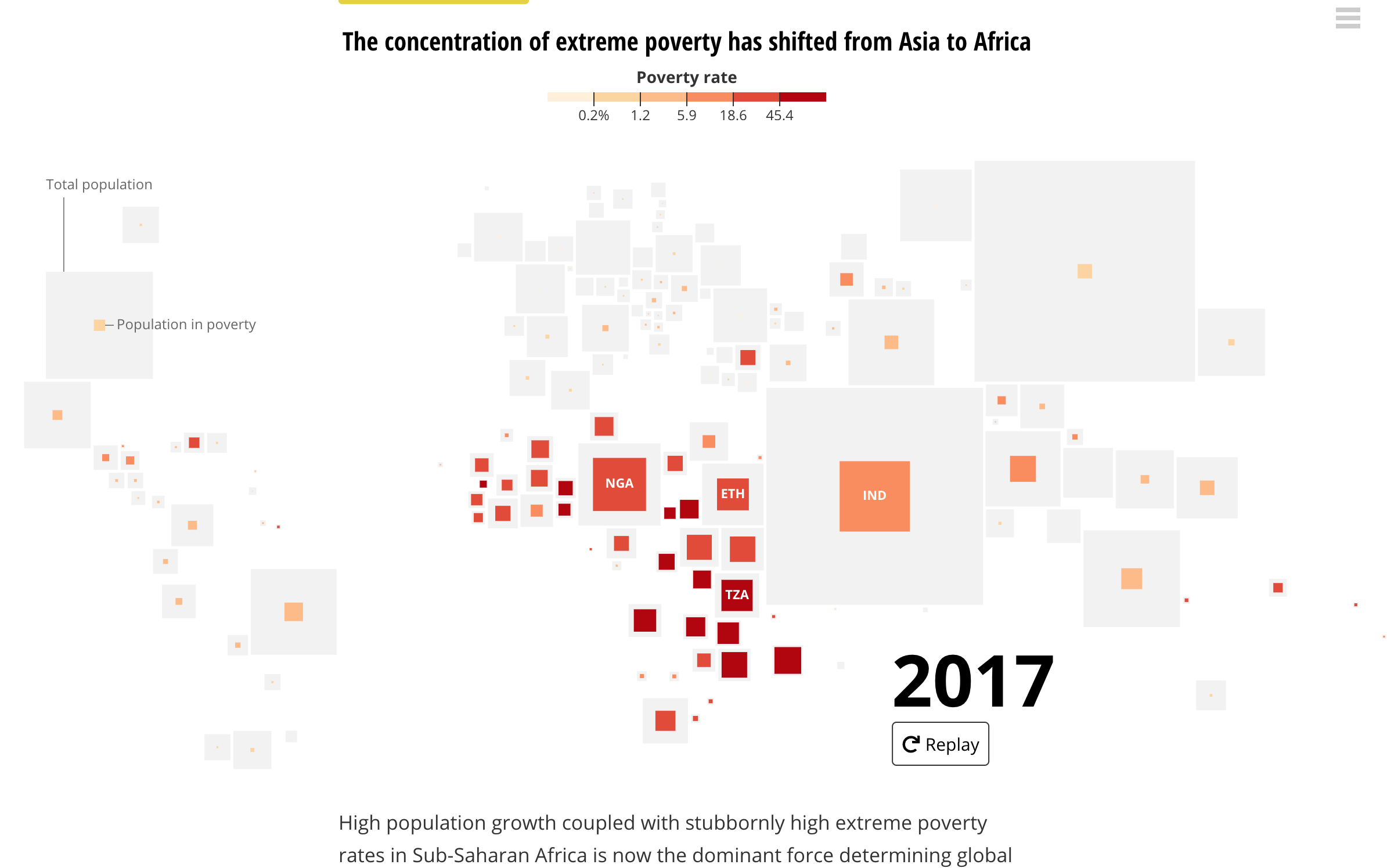
(Here below: an example from chapter 2 and an application to ethnic segregation in the USA)
Dot-density population map of race in the United States from census estimates, 2018. Source: The Washington Post. https://www.washingtonpost.com/graphics/2018/national/segregation-us-cities/
The Atlas of Sustainable Development Goals 2020 presents interactive storytelling and data visualizations about the 17 Sustainable Development Goals. It highlights trends for selected targets within each goal and introduces concepts about how some SDGs are measured. Where data is available, it also highlights the emerging impact of the COVID-19 pandemic on the SDGs.
The Atlas draws from the World Bank’s World Development Indicators database, as well as from a wide variety of relevant data sources from scientists and other researchers worldwide.
Electric cars are increasingly regarded as an interesting option to lower greenhouse emissions and curb pollution, especially in cities. There is often criticism, however, around a number of critical issues that would make electric vehicles not such a “green” option.
1- Some critics say that electric cars contain a number of rare earth metals whose extraction and processing are intensive in terms of energy demanded and use of chemicals. Furthermore, rare earth elements are mostly provided by China, making it a sensitive geopolitical topic. Other main ingredients in the electric car recipe include lithium, and cobalt, whose extraction also give concerns in terms of their environmental and social impact.
2- Related to the previous point, some critics say that batteries – the main component of electric cars- is not recycled and therefore we would be contributing to generating a large volume of polluting high tech wastes.
3- Where does the electricity for recharging electric cars come from? In countries that still rely on fossil fuels (such as Germany with coal) an important question is wether it is really a greener option to use electricity instead of gasoline?
A Swiss documentary addresses the way these topics are being framed by media and in the public opinion. What they found is that these criticisms are largely unwarranted or at least exaggerated. The team fully dismantled an electric car along with a conventional one, and found no traces of rare earth in the electric ones while they did find them in the catalyzer of the fuel one. Besides, they went to Congo to find that accusations of child labour in cobalt mines are only a marginal part of the story, whereas in Chile they discovered that Lithium production is not so polluting as portrayed. Eventually, the documentary makes the viewer ask the question of: why do I know what I know? Why do conventional and social media give so much attention to negative stories in order to throw bad light on electric cars without questioning conventional ones?
You can watch their trailer below (french only for the moment), and you can find here a list of their sources.
“Identifying and managing risks is nowadays key in any strategic planning. Under the wording risk management, companies aim to control and minimize the risk level that could impact their short or long-term profitability. In cities, risk management is expected to drive urban planning safety approach and better integrate hazards occurrence. It is based on procedural and systemic approaches, most of the time certified, built on conventional and analytical methodologies.
In a rapidly changing world where surprise is likely (1), the same descriptive approach applies on our environment threatened by natural hazards. Our fragility awareness reflects in greater consideration for human vulnerability, but the modus operandi to decrease the risk level is comparable, based on decision tree analysis and quantitative/qualitative frameworks. Amongst the first questionings on the relevance of such linear thinking, Holling’s “panarchy” (2) conceptual model introduced the idea that social and ecological systems are interlinked and continuously restructure and renew depending on their environment. By reconsidering the norms, introducing unpredictability as a random variable and conceptualizing risk management, the seeds of resilience had been sowed. On one hand, a normative approach; on the other, a critical thinking?”
For those who missed the session Territorial Intelligence for Multi-level Equity and Sustainability, you can visualize online individually each presentation :
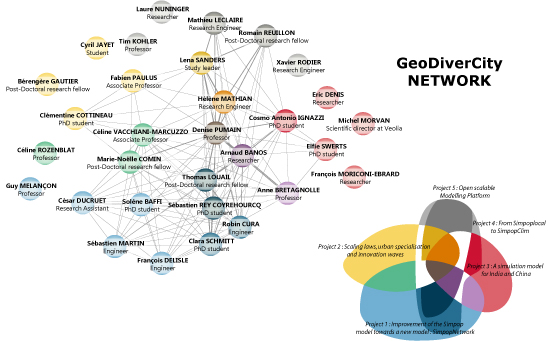
Denise Pumain, University Paris 1. ERC GeodiverCity (Keynote Speaker – Conference CS-DC)