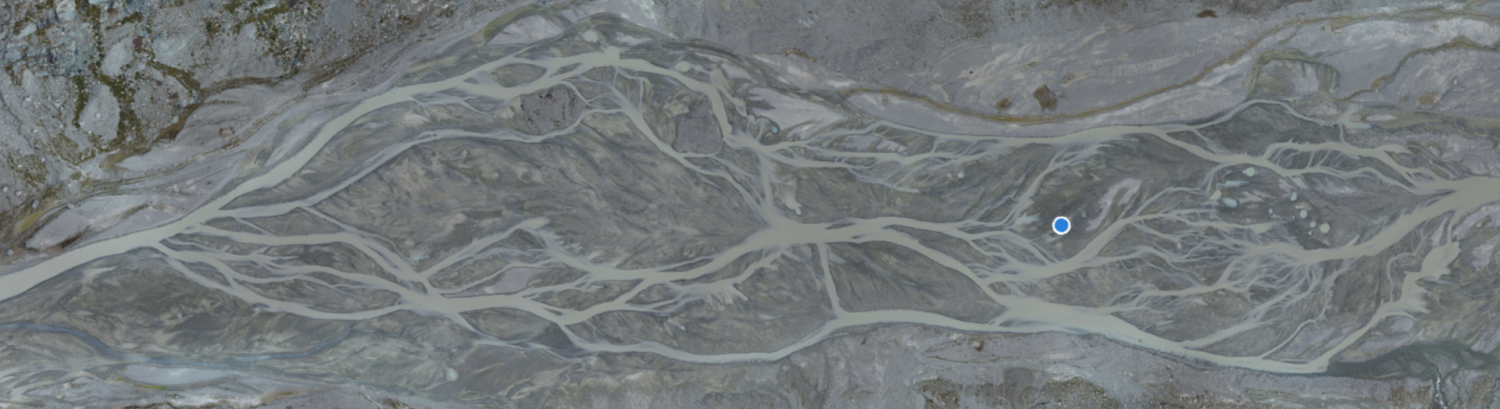
The retreat of glaciers and ice sheets since the end of the Little Ice Age has exposed proglacial margins that rapidly develop new ecosystems. These areas are quickly colonized by soil microbes (Bacteria, Archaea), which are less constrained by nutrient scarcity and disturbance than higher organisms. Microbial communities drive biogeochemical changes that initiate pedogenesis, and glacier-forefield ecosystem development is commonly examined through chronosequences. However, the ecological trajectory of the soil microbiome and the influence of local environmental factors on community composition remain unclear. We investigated bacterial community composition along a 180-year glacier-forefield chronosequence in southwestern Switzerland, focusing on links between sediment microbiology, geochemistry, and environmental context. Taxonomic diversity decreased over the first 115 years after exposure, driven by declining psychrophilic autotrophs and increasing psychrotolerant heterotrophs. Species turnover corresponded to changing abiotic conditions, including rising carbon and nitrogen content, soil acidification, and warming. Local context (topography, seasonality) exerted only minor effects on the soil microbiome, likely contributing to the rapid ecological convergence observed among sites farther from the current glacier front. Our results show that soil bacterial communities and soil development follow a shared geoecological trajectory after deglaciation. Considering environmental context improves understanding of proglacial-margin ecology amid accelerating twenty-first-century glacier retreat. A copy of the paper is freely available here.