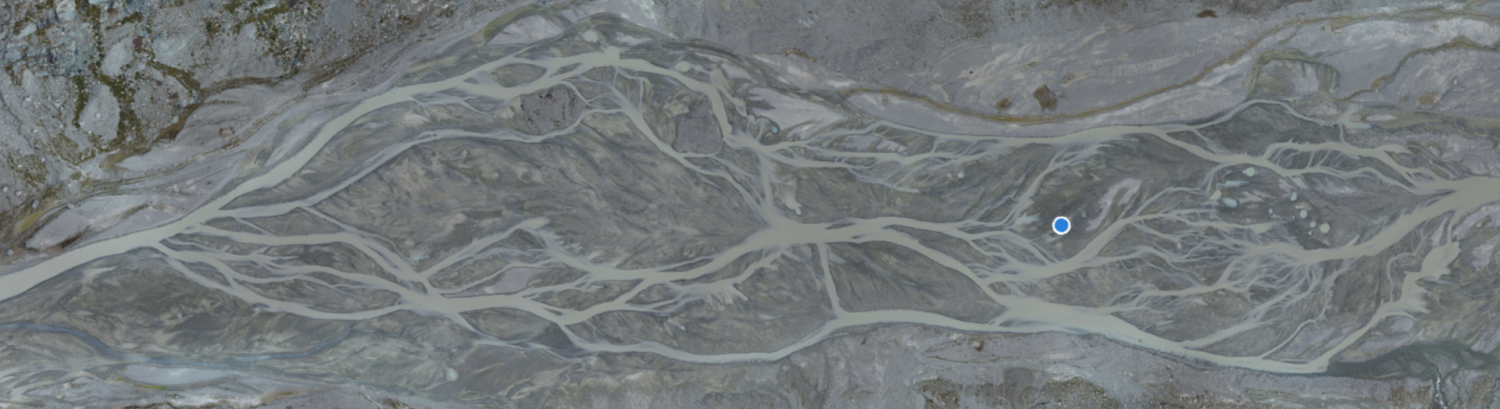
The rapid retreat of mountain glaciers and the formation of new glacial lakes due to climate change pose considerable risks in mountain regions, especially where they increase the frequency and magnitude of glacial-lake outburst floods (GLOFs) and Jökulhlaups. This study presents an integrated inventory of glacial lakes in the Hindukush- Region of Afghanistan (HKA) for 2020 and the first multi-decadal assessment (1990–2020) of glacial lake changes. For 2020, we identified 2596 glacial lakes and supra-glacial ponds with an area of 96.8 ± 14.8 km2 (2362 lakes ≥0.003 km2 and 234 smaller lake/ponds <0.003 km2). This indicates an increase of 32% by number and 21% by area since 1990. We analyzed lake formation, expansion, decline and disappearance and found that patterns of change vary significantly between regions and as a function of altitude. 56% of lakes expanded, 20% shrunk, 17% were newly formed and 6% disappeared between 1990–2020. Glacial lakes in the HKA begin at ∼2980 m-asl, and the rate of increase of lake area was greatest for the elevation range 5300–5800 m-asl, during 2010–2020. Whilst lakes were generally increasing in area, those in the southwestern region of the HKA were decreasing, mainly because they were associated with smaller glaciers that were in a drier region. Smaller lakes (≤0.01–0.05 km2), particularly ice-contact proglacial lakes showed rapid increases, whereas larger lakes (>1.0 km2) tended to decrease in size. This study reveals the importance of considering geographical and altitudinal variation in glacial-lake formation and the role of smaller-lakes in GLOF-formation and water resources. A copy is freely available here.
- New Paper Published : Simulation of proglacial forefield morphodynamics and their implications for the filtering of subglacial sediment export following glacier retreat
- New Paper Published : Model Inputs and Data Requirements for Process‐Based Stream Temperature Modeling in Regulated Peri‐Alpine Rivers