Our keynote speakers are (subject to modifications):
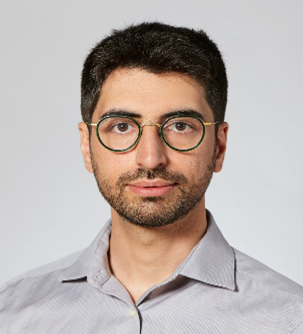
Prof. Jordan Aaron (ETH Zürich, Switzerland): New insights into the failure and runout of rock slopes derived from field observations and numerical modelling – (Abstract)
Jordan Aaron is an Assistant Professor and Chair of Engineering Geology in the Department of Earth and Planetary Sciences at ETH Zurich. His work focusses on understanding and managing landslide phenomenon through a combination of field monitoring and modelling. His work on this topic has been recognized through numerous awards and grants, including the 2019 Norman Medal from the American Society for Civil Engineers.
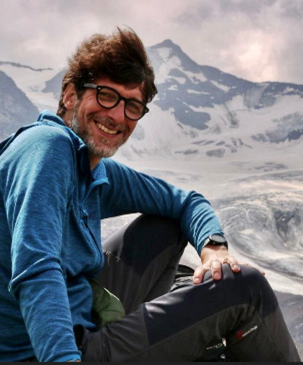
Prof. Federico Agliardi (University of Milan-Bicocca, Italy): Spatial and temporal dimensions of the slow to fast transition of large rock slope failures
Prof. Federico Agliardi is Professor at the University of Milan-Bicocca, he is a recognised specialist in rock slope deformation. His research focuses on the dynamics and evolution of rock slopes, in particular the transition from slow creep to rapid collapse of large gravity slides. He is thus making a significant contribution to our understanding of the precursor mechanisms of large-scale rock deformation.
(generated by ChatGPT, summarize by M. Jaboyedoff using Copilot)

Dr Ivo Baroň (Institute of Rock Structure and Mechanics, the Czech Academy of Sciences, Czech Republic): Rapid deep-seated slope failures in different paleoclimate: coseismic or rainfall induced? Insights from the Outer Western Carpathians – (Abstract)
Ivo Baroň a geoscientist with an interdisciplinary background in structural geology, geomorphology, engineering and Quaternary geology, and applied geophysics. He currently focuses on highly-mobile coseismic landslides and active faults with associated brittle structures, their geometric and kinematic analysis, monitoring, stress inversion, radiometric dating, modelling and hazard estimation.
Lars Harald Blikra (The Norwegian Water Resources and Energy Directorate – NVE, Norway): History, status and future development of monitoring and risk reduction related to unstable rockslopes in Norway – (Abstract)
Lars Harald Blikra is head of Section for Floods and landslides at the Norwegian Water Resources and Energy Directorate (NVE). Included is the national responsibility for mapping and monitoring of large unstable rockslopes. He has extensive experience in dealing with landslide problems in Norway, in particular rock slides, stability of rock slopes, and stability of glacial tills and sensitive clay slopes on fjord margins. Have led several large research projects on climatic change and its effect on geohazard problems. Have extensive field experience, including geological mapping and landslide investigations. Leading and designing the investigations and monitoring in the Åknes/Tafjord Early Warning Centre and later NVE dealing with hazard related to large rock-slope failures and tsunamis. These are some of the largest monitoring projects on landslides in the world. The work involves scientific corporation with a series of national and international institutions, including the tsunami research community. monitoring, permafrost and InSAR.
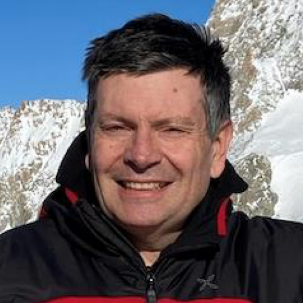
Dr Davide Bertolo (Service Géologique Régional de la Vallée d’Aoste, Italy): From Monitoring to Decision Making: Integrated Management of the Mont de La Saxe Landslide (Courmayeur, Italy) – (Abstract)
Dr Davide Bertolo heads the Aosta Valley Regional Geological Survey, where he oversees the monitoring and prevention of natural hazards. A specialist in the integration of advanced technologies (MTInSAR, satellite analyses, hydrogeological modelling), he leads projects to anticipate landslides in Alpine environments. The author of more than 60 publications, he plays an important role in improving geological risk management in mountain areas.
(generated by ChatGPT, summarize by M. Jaboyedoff using Copilot)

Prof. Martina Böhme (Geological Survey of Norway): Towards a national overview for rock avalanche potential – (Abstract)
Dr. Martina Böhme is Section Leader for Geohazards and Earth Observation at the Geological Survey of Norway (NGU). She holds a Ph.D. in Geology from the Norwegian University of Science and Technology. Her research focuses on unstable rock slopes, landslide hazards, and the use of remote sensing for geohazard assessment. Over the past decade, she has led several national projects on rock slope instability for the Norwegian Water and Energy Directorate (NVE) and contributed extensively to understanding slope deformation processes in Norway’s mountainous terrain.
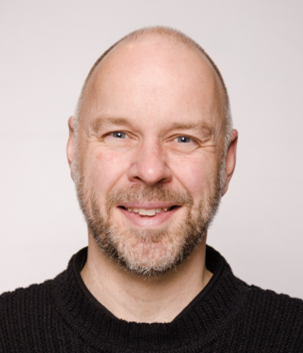
Prof. Marc-André Brideau (BGC and adjunct Prof. at Simon Fraser University, Canada): Uncertainties in displacement data and failure surface properties for large rock slope hazard characterization. (Online presentation) – (Abstract)
Marc-André Brideau is a Canadian engineering geologist with over 20 years of experience in rock slope hazard assessment, geohazard risk assessment, slope stability modelling, landslide runout modelling. He has worked in academia, at a research institute, and consulting firms in Canada and New Zealand. Marc-André is currently an adjunct professor at Simon Fraser University and a Director at the British Columbia Geological Survey. He has published over 70 technical articles on various aspects of landslide hazard characterization and numerical modelling.
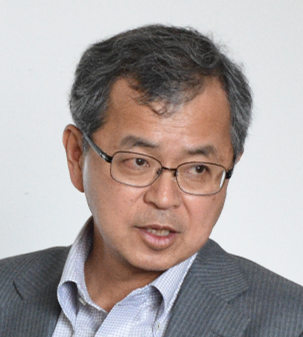
Prof. Masahiro Chigira (Fukada Geological Institute Tokyo, Japan): Detection and evaluation of possible catastrophic landslides – (Abstract)
Masahiro Chigira finished his Master course in Geology of the University of Tokyo, Japan in 1980. From 1981 to 1997, he worked for the Central Research Institute of Electric Power Industry. He moved to the Disaster Prevention Research Institute, Kyoto University as a professor in 1997, and since then to 2020, had been engaging in research on natural disasters induced by landslides and related basic studies including rock weathering, long-term gravitational slope deformation and slope development. He was the president of the Japan Society of Engineering Geology from 2009 to 2013. In 2027, he got the Minister of Education, Culture, Sports, Science and Technology Award for Science and Technology (for research into the preparation process of deep-seated landslides and prediction of their occurrence location) March in 2020, he retired from Kyoto University and moved to Fukada Geological Institute and in July, he became the chair of the executive board of the institute. In July 2025, he became an advisor of the Fukada Geological Institute.

Prof. Sabatino Cuomo, (University of Salerno, Italy): Volume amplification in debris avalanches induced by rainfall – (Abstract)
Sabatino Cuomo is Professor of Geotechnical Engineering at the University of Salerno, Italy, and serves as the Director of the Geotechnical Engineering Laboratory. He is a Core Member of JTC1 Natural Slope and Landslides of FedGIS (Federation for International Geo-Engineering Societies, ISSMGE, ISRM, IAEG, IGS), and Member of the Board of Directors of ALERT Geomaterials (The Alliance of Laboratories in Europe for Education, Research and Technology). He is serving as a Coordinator of LARAM School (International School on “LAndslide Risk Assessment and Mitigation) for PhD students, started in 2006, with a renewed International Scientific Committee (www.laram.unisa.it). He is the Financial Director of the International Consortium on Geo-disaster Reduction (ICGdR). Prof. Sabatino Cuomo serves as Associate Editor-in-Chief of Geoenvironmental Disaster Journal, Springer, Associate Editor of Canadian Geotechnical Journal, Editorial Board member of Computers and Geotechnics, Soils and Foundations, Geotechnical Engineering, and Environmental Geotechnics. His research interests include Landslide Mechanisms, Solid-fluid transition, Landslide Dynamics, Regional slope stability, Slope erosion, Geosynthetics reinforcement, Laboratory testing of unsaturated soils, and Constitutive Modeling. He has published more than 200 papers in international journals and conference proceedings.He has been awarded the 2nd Edition of the Alberto Giovannini Prize by Webuild company for an innovative research proposal named “Green Energy Dissipation systems for protection against debris avalanches”, June 2023; the ICGdR Science Achievement Award 2021 by the International Consortium on Geo-disaster Reduction, July 2021. Other recognitions include the Editor Choice Best Paper 2013 Canadian Geotechnical Journal (Canadian Geotechnical Journal. 50(9): 924-934, 2013); the nomination as the Italian Corresponding Member of SYMPG (Student and Young Members Presidential Group) of the ISSMGE, 2009; and as Italian Delegate of the Italian Geotechnical Society to the XVII European Young Geotechnical Engineering Conference, Zagreb, 2006; and the 5th Sapio Prize by the Italian Geotechnical Society in 2004.

Dr. John Dehls, (Senior geologist at the Geological Survey of Norway): From Norway to the World: Expanding Ground Motion InSAR for Landslide Hazard Assessment – (Abstract)
Dr. John Dehls is a senior geologist at the Geological Survey of Norway, specializing in satellite-based ground motion monitoring for landslides and unstable rock slopes. He has led the national InSAR programme in Norway, contributed to the European Ground Motion Service (EGMS), and is now promoting the concept of a Global Ground Motion Service to make these technologies accessible to vulnerable regions worldwide.

Guillaume Favre-Bulle (Service des dangers naturels du canton du Valais, Switzerland): The catastrophic 2025 landslide in Blatten (Switzerland) from an integrated risk management point of view
Guillaume Favre-Bulle is a graduate of Lausanne University, he has more than 15 years’ experience in natural hazard management in the public and private sectors. He will take over as head of the Natural Hazards Service of the canton of Valais in October 2025. His expertise covers the operational management of natural hazards and the study of areas at risk from melting permafrost.
(generated by ChatGPT, summarize by M. Jaboyedoff using Copilot)
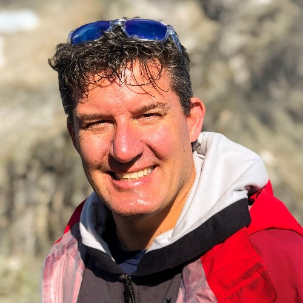
Corey Froese (Wavelength Advisory Services, Canada): Remote-sensed detection and characterization of the St. Cyr Rockslide, British Columbia, Canada – (Abstract)
Corey Froese is a geological engineering consultant based in Western Canada and has spent over 30 years with a focus on the risk management associated with deep seated landslides. For over 20 years this has focused on the use of remote sensed technologies, such as InSAR and Lidar, to characterize spatial and temporal patterns of landslide movement. Over Corey’s career in both government and the private sector he has focussed on the understanding and risk management for large, complex and slowly moving rock slopes in both glaciated and mountain environments with a key focus on characterization, decision making and early warning. Since 2010 Corey has chaired the International Expert Group reviewing the rock slope risk management program in Norway and has also acted as an internal technical advisor for the Canadian Space Agency.

Prof. Johan. Gaume (ETHZ, SLF, Switzerland): Towards a predictive 3D model for alpine mass movements: insights from recent events in the Swiss Alps – (Abstract)
Johan Gaume obtained his mechanical engineering and Master’s degrees in 2008 from the Grenoble Institute of Technology. He received a Ph.D. from Grenoble Alpes University in 2013. He was then a postdoctoral researcher at WSL/SLF in Davos. In 2016, he joined EPFL as a Research and Teaching Associate with extensive visits to UCLA and UPenn. From 2019 to 2022, he was an Assistant Professor at EPFL and head of the Snow and Avalanche Simulation Laboratory. Since 2022, he is Associate Professor of Alpine Mass Movements at ETH Zürich, a position which is jointly affiliated with the WSL Institute for Snow and Avalanche Research SLF in Davos, Switzerland. He is a member of the Science Alliance of POW – Protect our Winter and member of the Editorial Board of Computational Particle Mechanics. His research interest is in the initiation and propagation of gravitational mass movements, including the development of multiscale methods based on computational geomechanics validated using laboratory and field experiments. His work on snow avalanches was extended to model glacier calving and tsunamis as well as multiphase alpine mass movements. He is also known for proposing, a plausible explanation to the Dyatlov Pass Incident, a famous Russian Cold case. His work improves the physical understanding of slope instability and mass flow prediction with impacts on applied research related to risk assessment and management in mountainous regions.
Prof. Reginald. L. Hermanns (NTNU & senior researcher at the Geological Survey of Norway, Norway): Knowns and unknowns in assessing the impacts of climate change on rock slope failures in the Norwegian Arctic and sub-Arctic and implications for hazard assessment – (Abstract)
Prof. Reginald. L. Hermanns is Associate Professor at NTNU and Senior Researcher at the Geological Survey of Norway. His research focuses on rock-slope stability and related hazard and integrates neotectonics, paleoseismology, Quaternary landscape development. His specific focuses include hazard and risk classification, secondary effects of rock-slope failures such as damming and displacement waves, Quaternary dating techniques, and integration of diverse monitoring data with field-based structural geology and geomorphology. Reginald has worked in the past 20 years mainly in Norway, the Arctic and the Himalaya but has also broad field experience from the Andes (15 years) and some experience from Canada and the Alps.

Prof. Wei HU, (Chengdu university of technology, China): The hypermobility of rock avalanche, insights from experimental study
Dr. Wei Hu is a distinguished professor at the Chengdu University of Technology, where he has been a key figure in the State Key Laboratory of Geohazard Prevention and Geoenvironment Protection since 2011. Born on February 13, 1981, Dr. Hu has an impressive academic background, having earned his Doctorate in Civil Engineering from École Centrale De Nantes in 2010, following a Master’s degree in Bridge and Tunnel Engineering from Southwest Jiaotong University and a Bachelor’s degree in Civil Engineering from Southwest Petroleum University. Dr. Hu’s research interests are diverse and impactful, focusing on landslides, rock avalanches, granular flow dynamics, shear zone instability, and fault mechanisms. His multilingual proficiency in French, English, and Japanese has enabled him to engage in extensive international scientific collaborations and share his research findings at global academic conferences. Throughout his career, Dr. Hu has published over 60 SCI papers, with 45 as the first or corresponding author. His work has been featured in prestigious journals such as the Proceedings of the National Academy of Sciences (PNAS), Earth and Planetary Science Letters, and Geophysical Research Letters. Notably, one of his papers in Earth and Planetary Science Letters was highlighted by Nature as a global research highlight.
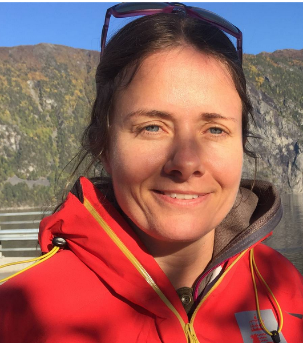
Dr. Lene Kristensen (The Norwegian Water Resources and Energy Directorate – NVE, Norway): Do we monitor the most critical slopes? Recent Norwegian cases and response – (Abstract)
Dr. Lene Kristensen is a geologist at the Norwegian Water Resources and Energy Directorate (NVE), specializing in monitoring unstable rock slopes, risk assessment and management, and emergency preparedness. She collaborates with local authorities – county governor and municipalities in hazard plans and crisis events. A key focus area is obtaining the best possible monitoring data – from in situ instrumentation and from satellites. Interpreting the warning signals that nature provides, understanding driving forces and using these insights for safeguarding communities is a priority

Dr Christophe Lambiel, (Institut des dynamiques de la surface terrestre – UNIL, Switzerland): Permafrost degradation in high mountain rock slopes and its role in the Blatten disaster
Dr. Christophe Lambiel is senior lecturer at the Institute of Earth Surface Dynamics of the University of Lausanne and heads the High Mountain geomorphology group. He is president of the Swiss Geomorphological Society, and member of the steering and scientific committees of PERMOS, the Swiss permafrost monitoring network. His research focuses on mountain geomorphology, with a particular emphasis on rock glacier dynamics, including mapping and velocity assessment, as well as on the monitoring, mapping, and characterization of permafrost, with special attention to steep debris and rock slopes.

Dr. Eric Larose, (CNRS and geophysicist at Grenoble Alpes University, France): Seismic monitoring of large rock instabilities
Dr. Eric Larose, director of research at the CNRS and geophysicist at Grenoble Alpes University, is renowned for his pioneering work on the use of ambient seismic noise as a tool for monitoring and predicting slope movements. A specialist in innovative seismic correlation methods, he has developed techniques for anticipating gravity instabilities by listening closely to natural seismic variations, making him an international benchmark in the prediction of rock instabilities in the field of geophysics.
(generated by ChatGPT, summarize by M. Jaboyedoff using Copilot)

Dr. Mario Lovisolo, (C.S.G. S.r.l., Italy): « DMS® multi-parametric columns for subsurface monitoring
Mario Lovisolo is geologist, registered at the chartered order, began in 1995 his career in the profession; in 1997 he joined CSG company extending the investigation activities associated with geology, geophysics, hydrogeology, slope stability with the realization of Early Warning monitoring systems for large landslides. He participated in the development of patents, owned by CSG, relating to devices for geotechnical monitoring in soils, rocks and structures
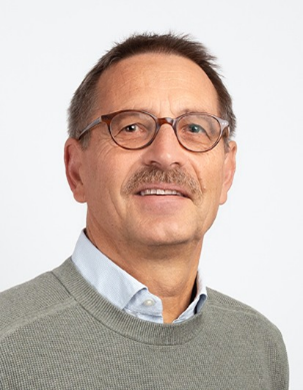
Simon Löw, (Prof. em. ETH Zurich, Switzerland): Landslide Hazards in the Himalaya of Bhutan – (Abstract)
Simon Löw (Loew) was appointed Chair of Engineering Geology at ETH Zurich in 1996, after completing his Ph.D. and spending ten years in industry. His main research interests at ETH concerned hydro-mechanical processes in fractured rocks at project-relevant scales. His large, interdisciplinary research group conducted major research projects related to hydro-mechanical (HM) coupled rock mass behavior of deep tunnels and repositories for nuclear waste, permeability structure and heat transport in fractured rocks, and formation mechanisms and progressive failure of large rock slope instabilities. Many of these projects involved comprehensive hydro-thermo-mechanical in situ investigations in remote Alpine environments or in underground research labs, including research boreholes with sophisticated testing and monitoring technologies. At ETH, Simon Löw was heavily involved in teaching and was responsible for the M.Sc. program in Engineering Geology and the Continued Education Program in Applied Earth Sciences. He retired from ETH in January 2022, but still maintains active collaborations with the Department of Earth and Planetary Sciences. Simon Löw is closely linked to the private industry and public administration sectors, primarily as an expert consultant in deep tunneling, geological waste disposal, and rock slope instabilities. He is currently president of the Swiss Commission for Nuclear Waste Disposal (EGT) and reviews the Swiss Site Selection and General License Application Program.

Dr. Jean-Philippe Malet, (CNRS / Université de Strasbourg / EOST – France): The OMIV Legacy: Two Decades of Multi-Instrumental Insights into Large Landslide Kinematics
Jean-Philippe Malet (PhD, Habil.) is Director of Research at CNRS (since 2007). He holds a PhD in Earth Sciences and a Habilitation in Geophysics. His research focuses on geohazards, combining in-situ and satellite geophysical observations with physically based and AI-driven simulations. At the interface of Geosciences and Data Science, he develops methods for information extraction, hazard forecasting, and large-scale data exploitation.
He has led numerous national (ANR: Ecou-Pref, TRIGGERLAND, SAMCO, SISCA, HYDROSLIDE), European (MCITN Mountain-Risks, ERANET ChangingRISKS), and international (ESA/NASA: GEP, Alcantara, eo4alps, CEOS) projects. He coordinates the French National Landslide Observatory (SNO OMIV) and co-led the Solid Earth Satellite Imagery Observatory (SNO ISDeform, 2020–2023).
Author of 160+ peer-reviewed papers (H-index 52, 2025), he has supervised > 20 PhD students and 10 postdocs.
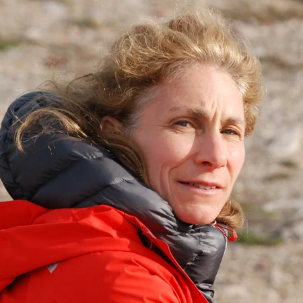
Prof. Anne Mangeney, (Institut de Physique du Globe de Paris, France): How to use seismic waves to get information on landslide characteristics (Online presentation)
Very early in her career, Anne Mangeney initiated fruitful collaborations across disciplines, working with researchers in solid mechanics, physics, and applied mathematics. These collaborations led to studies of various natural hazards, including landslides, volcanoes, and tsunamis. Using outstanding skills in mechanical modelling and profound understanding of physical processes, she developed a set of concepts that are now used to model the onset and propagation of these geohazards. Among the many influential contributions Anne Mangeney wrote, she studied the collapse of granular flows along slopes and developed a comprehensive body of work on the physics of landslides and avalanches. She has been consistently true to the vision of using non-linear dynamics to understand slope instabilities, with elegance and consistency, and has transformed this field of geosciences. This multidisciplinary approach was recognized as a ground-breaking work when she obtained in 2015 a prestigious Consolidator Grant, SlideQuakes, awarded by the European Research Council. Anne Mangeney has showed a continuous curiosity and open-mindedness towards new disciplines, a great ability to make discoveries beyond the frontiers of science, and a strong determination to create new interactions between scientists. Her academic career has developed in parallel with an intense activity of training postgraduate students and services to the scientific community, without neglecting her societal implication manifested through the transfer of academic tools and knowledge towards risk assessment. She chaired the CNRS Earth Sciences Committee from 2021 to 2025.

Prof. Irene Manzella, (University of Twente, Netherlands): From lab bench to smart slopes: an interdisciplinary journey studying Rock Avalanches and their impacts
Dr Eng Irene Manzella is Head of the Centre for Disaster Resilience and Associate Professor at the Faculty of Geo-Information Science and Earth Observation (ITC) of the University of Twente in the Netherlands. Her research field extends across the study of the hazard and risk assessment of multiple and complex phenomena with a multi-disciplinary approach. Her education includes a Master at Politecnico di Milano (Italy) in Environmental/geotechnical Engineering, a Master of Advanced studies in “Settlements upgrading for cooperation and development”, focused on prevention and forecast of natural hazards and a PhD at the Rock Mechanics Laboratory at the École Polytechnique Fédérale de Lausanne (Switzerland). She has carried out a Postdoc at the Civil engineering department at the Massachusetts Institute of Technology (MIT, US) and a postdoc and a senior Research and teaching assistant role at the University of Geneva. She has worked as Assistant Professor first and then as Associated Professor in Engineering Geology and Geohazards at the University of Plymouth (UK).

Prof. Véronique Merrien, (Conservatoire national des arts et métiers, Paris, France): Modelling the large landslides – (Abstract)
Véronique Merrien is an Emeritus Professor at the CNAM, a geological engineer. She has worked as a lecturer and researcher for 25 years at the Ecole des Mines de Nancy. Subsequently she worked 10 years at the Conservatoire Nationale des Arts et Métiers, on rock mechanics, and modelling of discontinuous media.

Dr. Thierry Oppikofer (Terranum, Switzerland): Regional scale susceptibility map for rock avalanches and consequences-based prioritization for follow-up activities – (Abstract)
Thierry Oppikofer holds a PhD in Geology from the University of Lausanne and specializes in natural hazards, with a strong focus on rock slope instabilities. He has extensive expertise in detecting, characterizing, and monitoring unstable slopes using advanced remote sensing and 3D terrain modeling. Before joining Terranum in 2017, he spent several years at the Geological Survey of Norway (NGU), where he investigated large unstable rock slopes across Norway and evaluated their hazard and risk. At Terranum, a spin-off of the University of Lausanne, he supports public authorities in better understanding and managing geohazards in mountain environments.
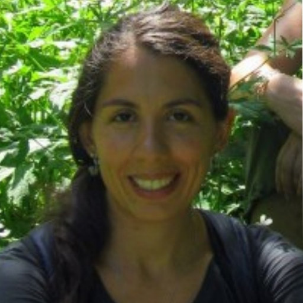
Dr. Ivanna Penna, (Ramboll, Norway): Permafrost and large unstable rock slopes: Controls on Displacement Rates in Norway
In 2010, Ivanna earned a PhD from the University of Buenos Aires (Argentina), investigating rock avalanches and their effects in the Southern Central Andes. That same year, she completed a specialization in Geological and Climate-Related Risk at the University of Geneva (Switzerland), focusing on debris flow risk along an Argentine national road. From 2011 to 2014, she was a postdoctoral researcher in risk analysis at the University of Lausanne, working on landslides, hazard assessment, and stabilization techniques in Argentina, Bolivia, and Nepal. From 2014 to 2022, at the Geological Survey of Norway (NGU), she identified, mapped, and assessed unstable rock slopes, collaborating on projects in Norway, Chile, and India. Since 2023, she has led hazard mapping and mitigation projects at Rambøll and teaches in the risk management specialization CERG-C at the University of Geneva. In 2010, Ivanna completed a PhD at the University of Buenos Aires (Argentina), focusing on the spatial and temporal distribution of rock avalanches, their key conditioning factors, and their impact on erosion rates in a sector of the Southern Central Andes. In the same year, she also completed a specialization in the Assessment and Management of Geological and Climate-Related Risk at the University of Geneva (Switzerland), with a final memoire centered on debris flow risk assessment along a national road in Argentina. From 2011 to 2014, Ivanna was a postdoctoral researcher in the Group of Risk Analysis at the University of Lausanne (Switzerland), where she was primarily involved in projects related to landslides, land degradation, geological hazard assessment, and slope stabilization techniques. Her study areas included Argentina, Bolivia, and Nepal. From November 2014 to December 2022, Ivanna worked at the Geological Survey of Norway (NGU), where her tasks included the identification and mapping of unstable rock slopes, measuring of their displacement rates, modeling their runout zones, and the stablishmet of their hazard level. While her research at NGU was primarily focused on Norway, she also participated in collaborative projects in Chile and India. Since January 2023, Ivanna has been working at Rambøll, where she leads hazard mapping projects and projects related to the implementation of mitigation measures against landslides. In addition, she is part of the teaching staff for the specialization program Assessment and Management of Geological and Climate-Related Risk at the University of Geneva (Switzerland).
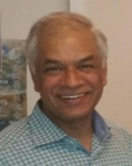
Prof. Shiva Pudasaini, (TU Munchen, Germany): Thermo-hydro-mechanics of multi-phase rock-ice avalanche – (Abstract)
Dr. Shiva P. Pudasaini is a world-renowned scientist specializing in the advanced modeling and simulation of complex mass flows like landslides, debris flows, and rock avalanches. His pioneering multi-disciplinary research has solved major engineering and environmental challenges, and his work is widely cited. A graduate of TU Kathmandu and TU Kaiserslautern, with a PhD from TU Darmstadt, Dr. Pudasaini has worked at the University of Bonn since 2006 and, since 2020, holds a Visiting Professorship at the Technical University of Munich. As a distinguished reviewer for over 100 international journals and funding agencies, he has led several innovative research projects and is a key developer of r.avaflow, an open-source tool for simulating multi-phase cascading mass-flows (https://avaflow.org/). Dr. Pudasaini has given over 170 presentations—89 as invited talks—and teaches at international schools. He authored “Avalanche Dynamics” and published over 85 influential journal articles on rapid flow and granular avalanche dynamics.

Prof. Dr. Þorsteinn Sæmundsson, (University of Iceland & President of the Geoscience Society of Iceland): Glacial lake outburst flood hazards, a perspective from Iceland – (Abstract)
Þorsteinn Sæmundsson is an Icelandic geologist and Associate Professor at the University of Iceland. He received his Ph.D. in Quaternary Geology from Lund University, Sweden, in 1995. His research areas include mass movements, slope instability, and natural hazards in Iceland’s mountainous regions. He has performed field studies on landslides, debris flows, and snow avalanches. Between 2000 and 2014, Þorsteinn led the Natural Research Centre of Northwest Iceland. He previously worked as a snow avalanche specialist at the Icelandic Meteorological Office. At the University of Iceland, he teaches courses in geology, geomorphology, and natural hazard assessment. He has contributed to hazard mapping and risk evaluation for communities in Iceland. Þorsteinn has also served as President of the Geoscience Society of Iceland. His career includes research, teaching, and work in hazard management in Nordic regions.
(generated by ChatGPT, summarize by M. Jaboyedoff using Copilot)
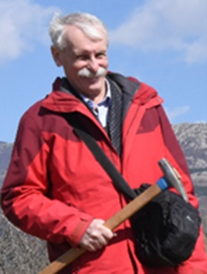
Dr. Alexander Strom, (Research institute of Energy Structures – branch of JSC « Hydroproject institute », Moscow, Russia): Rock avalanche mobility – what is its optimal characteristics? (Oline presentation) – (Abstract)
Dr. Alexander Strom is a chief expert in the Research Institute of Energy Structures – branch of the JSC « Hydroproject Institute ». He is also a Professor of Sergo Ordzhonikidze Russian State University for Geological Prospecting, and Visiting professor in SKLGP (Chengdu, China). He studied rockslides and rock avalanches in Central Asia (Pamir, Tien Shan), Greater Caucasus, Alps, Himalayas, Longmemshan. In 2018 published the book « Rockslides and Rock Avalanches of Central Asia ». Since 2006 has organized annual International field training course on rockslides and related phenomena in Kyrgyzstan (the Kokomeren Summer School). Published more than 150 papers in Russian and International journals, books and conferences proceedings
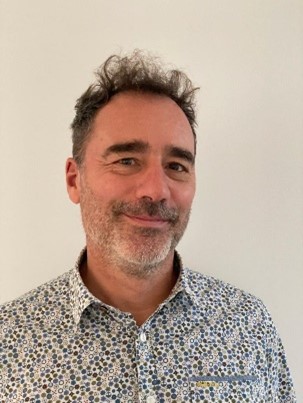
Dr. Tazio Strozzi, (Gamma Remote Sensing, Switzerland): Advantages and limitations of SAR interferometry for large rock instabilities – (Abstract)
Dr. Tazio Strozzi has been with Gamma Remote Sensing, Switzerland, since 1996, where he is responsible for the development of radar remote sensing applications and is manager of research and commercial projects. He has extensive experience in terrestrial and satellite radar interferometry (InSAR) for Earth surface displacements study. A pioneer in using InSAR to monitor landslides and other mass movements in alpine regions, he has over 100 peer-reviewed publications.

Carlo Rivolta, (Ellegi srl, Italy): Two decades of examples and cases of long-term natural hazards GBInSAR monitoring under climate change – (Abstract)
Carlo Rivolta received the Laurea (M.S.) degree in Mechanical Engineering at the Politecnico di Milano, Italy in 1998, he is Chartered Professional Mechanical Engineer, and in 2001 he received a Master with praise in SMEs’ business administration at SDA – Bocconi University. In 2003 he was the founder of the JRC spin-off LiSALab srl (now Ellegi srl) the first commercial company using Ground Based Synthetic Aperture Radar to monitor natural hazards. He is currently CEO of Ellegi srl and he is in charge of the operations of the Company. He is author (or coauthor) of more than 20 articles mainly published on international journals or conference proceedings in the field of remote sensing and natural hazard assessment.
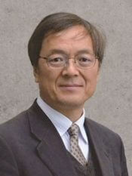
Prof. Fawu Wang, (Tongji University, China): Friction behavior of giant rockslides considering temperature effects – (Abstract)
Dr. Fawu Wang is Chairholder of the UNESCO Chair on Geoenvironmental Disaster Reduction at Shimane University, Professor at Tongji University in China, and Professor Emeritus at Shimane University, Japan. He has been instrumental in founding the San-in Forum for Disaster Prevention, a center for Natural Disaster Education and Research, the International Consortium on Geo-disaster Reduction, and launching the journal Geoenvironmental Disasters with SpringerOpen. Before Shimane University, he worked at Kyoto University, Kanazawa University, and Changchun College of Geology. Over nearly 40 years, Dr. Wang has focused on landslides—their mechanisms, prediction, and mitigation across different triggers like earthquakes and heavy rainfall. He has co-authored or edited nine books and published over 100 peer-reviewed papers, making more than 60 international presentations. He has received more than 15 research grants, including from JSPS and NSFC. Currently, Dr. Wang serves as Director-General of the International Consortium on Geo-disaster Reduction and Editor-in-Chief of Geoenvironmental Disasters

Prof. Gonghui Wang, (Research Center for Landslide Risk Cognition and Reduction, DPRI, Kyoto University, Uji, Kyoto, Japan): Large-Scale Landslides on Surprisingly Gentle Slopes: Lessons from Recent Earthquakes in Japan (Online presentation) – (Abstract)
Dr. Gonghui Wang is a full professor at the Disaster Prevention Research Institute (DPRI), Kyoto University, and serves as the head of the Research Center for Landslide Risk Cognition and Reduction at DPRI. Since earning his Ph.D. from Kyoto University in 2000, Dr. Wang has dedicated nearly three decades to landslide research at DPRI, integrating approaches from geophysics, geotechnical engineering, engineering geology, hydrology, and geomorphology. His work has yielded significant insights, particularly on the initiation and movement mechanisms of rapid, long-runout landslides, as well as landslides induced by extreme weather events and earthquakes. He has authored more than 200 publications in leading international journals and serves as an editorial board member for several international, Chinese, and Japanese journals. Currently, Prof. Wang is the Chair of JTC1 (Joint Technical Committee on Natural Slopes and Landslides) under FedIGS (Federation of International Geo-Engineering Societies), and also serves as a Director of the Japan Landslide Society.